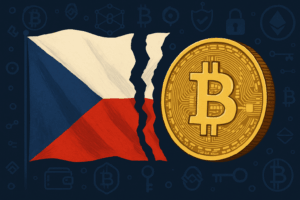
At the end of May, a Bitcoin transfer that came to light in the Czech Republic quickly dominated the political agenda. Former Justice Minister Pavel Blažek received a transaction of 468 BTC, worth millions of dollars, into his crypto wallet. Because the sender had a criminal past, the donation triggered widespread controversy. Although Blažek announced his resignation, the move failed to satisfy public opinion. Allegations that the donation was linked to organized crime expanded the scope of the investigation, while the government faced heavy pressure in parliament during a vote of no confidence initiated by the opposition.
The Source of the Donation and Initial Reactions
The crisis was sparked on May 29, 2025, when independent investigative journalists published crypto wallet analyses. It was revealed that 468 Bitcoin had been transferred to the personal wallet of former Justice Minister Pavel Blažek by an individual previously connected to the dark web platform Sheep Marketplace. That individual had been convicted in the 2010s of crimes including illegal trade in goods and fraud.
In his first statement, Blažek admitted to receiving the donation but claimed he was unaware of its origin: “I do not know this individual; the donation was made without my knowledge.” However, since the transfer was sent directly to his personal wallet, his explanation was deemed unconvincing. Opposition parties argued that the matter was not only ethical but also judicial in nature, and they called on the Justice Minister to resign.
Minister Resigned, Government Under Pressure
As public pressure mounted, Justice Minister Pavel Blažek announced his resignation on May 31, 2025. In a written statement, he said: “I have not engaged in any illegal conduct. However, I cannot ignore the political consequences of this situation.” Blažek insisted that the donation was being evaluated within the legal framework, but said he was stepping down out of “political responsibility.”
This move, however, did not stop the crisis from deepening. Opposition parties declared that resignation alone was insufficient and that the case could not be closed without full clarity regarding the source of the donation. ANO leader Andrej Babiš stated: “It is not credible that the Justice Minister claims to have been unaware of this transfer. This incident proves that organized crime is being tolerated from within the state.”
Amid growing tensions within the government itself, some coalition partners insisted that the investigation be conducted transparently and openly to the public. Prime Minister Petr Fiala responded by saying that the government would fulfill its responsibilities and safeguard the independence of the judiciary.
New Minister Appointed, Independent Investigation Launched
Following Pavel Blažek’s resignation, Eva Decroix was appointed Minister of Justice on June 10, 2025. Known as a lawyer with a reformist stance in public institutions, Decroix announced immediately upon taking office that a comprehensive investigation into the Bitcoin donation at the heart of the scandal would be launched. In addition to a special review commission established within the ministry, independent legal experts were also brought into the process to ensure transparency.
In her statement, Decroix said: “Public trust is the foundation of this ministry. No political or personal ties can be placed above the law.” It was also announced that technical support from international crypto-tracking firms had been enlisted to conduct blockchain analyses of the wallet addresses involved in the transfer.
As the investigation progressed, it was alleged that the donating wallet was directly linked to several addresses previously monitored by the FBI and Europol. This development raised the possibility that the case was tied not only to national but also to multinational organized crime networks.
Cryptocurrencies and the Criminal Economy: Lessons from the Czech Case
The Czech case highlighted how Bitcoin and similar crypto assets can be used within criminal economies. Digital crimes committed years ago via dark web platforms like Sheep Marketplace continue to leave their mark today. The fact that a justice minister in the Czech Republic received funds directly from a person with such a background underscored not only personal ethics and political accountability issues, but also how the unregulated nature of cryptocurrencies can pose risks to state institutions.
According to experts, crypto assets—when anonymity is abused—facilitate the circulation of illicit proceeds in areas such as money laundering, drug trafficking, illegal gambling, and cyber fraud. The Czech example showed that such money can reach not only criminal networks but also the highest levels of politics.
Officials from the European Commission announced they were closely monitoring the investigation and signaled that regulations to improve traceability of crypto assets would be tightened in the near future. The debate that began in the Czech Republic is therefore not merely a domestic issue, but rather a symbolic case exposing the ties between cryptocurrencies and global organized crime networks.