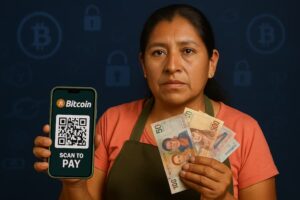
As Bolivia’s economic indicators flash warning signs, vulnerabilities in the financial system are pushing all segments of society to seek alternative solutions. A decline in trust toward the traditional banking system, shortages of foreign currency, and the depreciation of the boliviano on the parallel market have triggered growing interest in digital currencies. Today, from restaurants to beauty salons, many small businesses accept payments in Bitcoin and stablecoins such as USDT. The nationwide spread of crypto ATMs demonstrates how quickly this new era is being adopted.
The Rise of Bitcoin in Bolivia’s Daily Life
Bitcoin in Bolivia is no longer just the tool of investors — it has become a practical choice for ordinary people in daily life. Especially in major cities like Cochabamba, some cafés, restaurants, and hair salons have started to accept Bitcoin as payment. Certain businesses even offer up to 10% discounts to customers who pay with crypto, encouraging adoption. This trend is a clear indicator that both consumers and business owners are losing confidence in the national currency.
Crypto wallet usage is also spreading. QR code payment systems are being integrated even by small businesses. The number of users who can transact in Bitcoin without a bank account, using only a mobile device, is growing. For locals, this is seen as both technically simple and economically safer. Especially as the boliviano continues to lose value, more people are using Bitcoin as a store of value in daily life.
Why Do Small Businesses in Bolivia Prefer Bitcoin?
For small and medium-sized businesses in Bolivia, Bitcoin is not just an alternative payment method but also a safety net against economic instability. As the boliviano loses value, traders who buy and sell goods find it increasingly difficult to preserve their capital. Limited access to foreign currency markets — especially for those without bank accounts or who cannot obtain dollars officially — pushes small businesses to look for alternatives.
Bitcoin provides that alternative. By holding sales revenues in Bitcoin, businesses gain some protection against the daily fluctuations of the local currency. In addition, Bitcoin offers the flexibility to receive cross-border payments or purchase goods from abroad. Many small entrepreneurs are now using Bitcoin both to store their income and to import goods without having to access scarce dollars.
Ease of daily transactions is another major factor. In Bolivia, where bank transfers are slow and costly, direct wallet-to-wallet Bitcoin payments improve cash flow for businesses. This not only saves time but also avoids high commission fees.
Platforms and Infrastructure Boosting Bitcoin Adoption in Bolivia
The growing adoption of Bitcoin in Bolivia is being fueled by the convenience provided by global crypto platforms. In particular, Binance’s peer-to-peer (P2P) infrastructure has filled a major gap in a country where trust in the banking system is eroding. With P2P, users can directly connect with one another to buy and sell Bitcoin in exchange for bolivianos. This system both resolves the inefficiencies of banking and makes crypto access more democratic.
Mobile-based digital wallets also allow users to transact without the need for a bank account. The younger population has quickly adapted to these technologies, while local crypto groups on Telegram and WhatsApp provide both technical support and transaction guidance.
Another important development is the emergence of physical Bitcoin ATMs in Bolivia, particularly in cities like Cochabamba. These ATMs enable users to buy Bitcoin directly with cash, making crypto accessible even to those with limited technical knowledge.
Together, these elements are accelerating Bitcoin’s acceptance not just as an investment vehicle but as a genuine payment and value-preservation system.
Concerns and Expert Warnings About Bitcoin in Bolivia
Although Bitcoin’s rapid adoption in Bolivia may appear to be a solution, experts warn that the trend carries serious risks. In particular, low financial literacy combined with exposure to a highly volatile asset like Bitcoin could leave vulnerable groups even more economically fragile. Short-term gains from volatility may ultimately lead to significant long-term losses.
Former officials of the Central Bank of Bolivia describe the trend as a risk of “crypto-colonization.” As the local currency weakens, the influence of foreign crypto platforms increases — potentially threatening Bolivia’s financial sovereignty. Since Bitcoin operates outside regulation, users remain unprotected in cases of fraud or technical failures.
Moreover, the absence of a crypto regulatory framework in the country creates major uncertainty for both investors and users. The government has yet to clarify its stance on taxation, consumer protection, and anti-money laundering policies, leaving Bitcoin’s rapid rise on unstable ground.
For these reasons, experts emphasize that instead of banning Bitcoin outright, Bolivia needs regulations that promote responsible adoption, protect citizens, and make the system more transparent.