 Crypto casino Peru is a phrase that often blends two different worlds: Peru’s regulated online gambling market and the offshore sites that accept digital coins. Peru allows licensed remote gaming and sports betting under a national framework overseen by MINCETUR, yet the same framework does not permit cryptocurrency transactions within the licensed system. As a result, many services promoted as crypto casinos tend to sit outside local authorization, even when they are well known internationally.
That gap creates confusion for players who want faster payments, more flexibility, or a sense of control over their funds. It also raises practical questions about safety, dispute resolution, and what protections you actually have if something goes wrong. In the sections ahead, we will clarify the legal reality, explain why people are drawn to crypto gambling in the first place, and outline what matters most when weighing advantages against trade offs.
Is A Crypto Casino Legal In Peru?
If you mean an online casino or sportsbook where you can deposit and withdraw using Bitcoin or stablecoins, the short answer remains no under Peru’s regulated remote gambling framework. Licensed remote gaming and remote sports betting are allowed, but crypto transactions are not part of the permitted payment methods within the regulated system.
This regulatory stance is set out in Ley N° 31557, as amended by Ley N° 31806, and implemented through Decreto Supremo N° 005-2023-MINCETUR. In practice, the framework became enforceable in February 2024, with the law applied from 12 February 2024 and the regulation applied from 13 February 2024.
This is why the phrase crypto casino Peru can be misleading. People use it as if it describes one category of sites, yet in Peru it usually points to an offshore product that operates outside the local authorization model. The regulated side is designed around authorization, identifiable operators, and payment controls. The crypto funded side is generally not.
Peru also sets a clear operational requirement for authorized platforms. A platform that is authorized to offer remote gaming or remote sports betting must operate using a domain extension from a defined set such as .bet.pe, .bet, .com, .pe, or .com.pe. If a site uses a different extension, it cannot meet that authorization requirement. At the same time, a local looking extension on its own is not proof of authorization. The only safe conclusion comes from verifying the operator behind the product and the authorization it actually holds.
The difference is not just technical. It affects what kind of oversight exists, how complaints are handled, and what practical options you have if a withdrawal is delayed or a dispute escalates. Offshore platforms can still feel polished and familiar, but a modern interface is not the same thing as local authorization.
Peru’s Online Gambling Framework In Plain English
Peru has a formal framework for remote gaming and remote sports betting. In practical terms, this means online casinos and sportsbooks are expected to operate within an authorization model that defines who can offer games, how platforms must behave, and what rules apply to payments and player protection.
Who Oversees The Market
The authority most closely associated with this framework is MINCETUR, Peru’s Ministry of Foreign Trade and Tourism. Within MINCETUR, the unit that handles gambling oversight is responsible for setting the operating requirements for remote gambling and for managing the authorization side of the market. For players, the key takeaway is straightforward. A legal online operator is not defined by popularity or branding. It is defined by whether it operates as an authorized service under Peru’s framework.
MINCETUR also has the authority to request IP blocking of unauthorized sites from internet service providers. For a player, this means that an offshore crypto casino could become inaccessible overnight, potentially complicating the process of withdrawing funds.
What Authorization Usually Covers
Authorization is more than a logo on a homepage. It connects a platform to real accountability through identifiable operator details and enforceable obligations. In a regulated setup, an operator is typically expected to support:
-
Verified player access so the platform knows who is playing and can enforce age rules
-
Clear terms and responsible play tools that are functional, not just promotional language
-
Transparent payment handling using permitted rails, with defined deposit and withdrawal processes
-
Operational accountability through traceable customer support and public operator information
This is also why payment methods are a compliance issue in Peru rather than a simple product feature. When crypto deposits appear, they usually point to a product that is not aligned with the locally authorized payment model.
The Two Markets Players Encounter
Most confusion happens because Peru facing gambling on the internet often looks like one market, but it behaves like two:
-
Peru authorized platforms that follow local rules and permitted payment rails
-
Offshore platforms that may be licensed elsewhere and may accept crypto, but operate outside Peru’s authorization model
Both can be professionally designed. Both can feel familiar. The difference is that only one side is built to match the protections and restrictions that come with local authorization.
Offshore Crypto Casinos Used by Players in Peru

Crypto casinos that accept Bitcoin or stablecoins are usually offered through offshore products rather than Peru authorized platforms. That matters in Peru because crypto transactions are not part of the permitted payment methods inside the regulated remote gambling framework. In practice, the phrase crypto casino Peru often points to this offshore side of the market, where brand familiarity can hide important differences in licensing, payments, and player protection.
Stake
Stake is widely recognized as a major name in crypto gambling internationally, and its global product is often associated with crypto deposits. At the same time, Stake also has a Peru facing version, stake.pe, which is presented as a locally licensed offering in Peru. This split is important because it shows how one brand can operate different products under different rules. If you are evaluating Stake from Peru, focus on the specific version you are using, the operator details presented for that version, and the payment methods it actually supports.
Check out Stake Crypto Casino!
Thrill
Thrill is an offshore crypto casino example aimed at an international audience. The overall experience can look polished and simple at the moment you deposit, but the most important details tend to sit in the withdrawal conditions and identity checks. Pay close attention to withdrawal terms, verification triggers, and whether the platform offers clear and reachable support if something goes wrong.
Check otu Thrill Crypto Casino!
Gamdom
Gamdom is frequently discussed in crypto gambling communities and often appeals to users who prefer digital first products. It is a useful example because it reflects a typical offshore pattern: strong recognition in niche audiences, flexible funding options, and a structure that is not designed around Peru’s local authorization framework. In practical terms, if crypto deposits are positioned as a core feature, that usually signals an offshore product rather than a locally authorized one.
Check out Gamdom Crypto Casino!
Why People In Peru Look For Crypto Casinos
For many players, crypto is not a trend, it is a tool. The interest behind crypto casino Peru usually starts with a practical desire to move money quickly, avoid unnecessary friction, and keep more control over deposits and withdrawals. Some players prefer stablecoins because the value feels predictable compared to coins that swing sharply, while others want a payment method that works the same way across different platforms and countries.
The Main Reasons Crypto Feels Attractive
-
Faster funding and withdrawals compared with some traditional rails, especially outside banking hours
-
More direct control of funds through personal wallets rather than card approvals
-
Borderless convenience on platforms that serve multiple regions
-
Stablecoin comfort for users who want to avoid price volatility
-
Privacy perception that can feel appealing even though many transactions remain traceable
It is also common for offshore platforms to support crypto because it reduces their dependence on local banking partnerships. That is why crypto casino Peru searches often lead to products that accept Bitcoin or stablecoins as a default option.
The Real Trade Offs You Should Understand
-
Legal mismatch since crypto transactions are not part of the permitted payment methods in Peru’s regulated remote gambling model
-
Weaker local protection because offshore products sit outside Peru’s authorization framework
- Banking friction: Major Peruvian banks like BCP, Interbank, and BBVA strictly monitor transactions related to unauthorized gambling. Even if you use a crypto exchange to ‘off-ramp’ your winnings, your bank may flag or block large incoming transfers if the source is linked to offshore gambling activities.”
-
Fees and slippage from network costs and exchange spreads
-
Volatility risk when balances are held in coins that fluctuate
-
Clone and phishing risk because popular crypto brands are frequently imitated
The core idea is simple. Crypto can reduce friction in some moments, but it can also increase risk and reduce your options if something goes wrong.
Taxes And What Players Should Understand In Peru
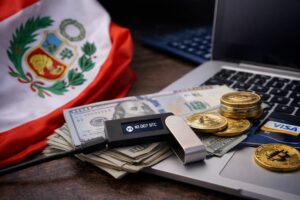 Money questions tend to surface right at the moment of withdrawal, especially when someone has been using an offshore site that accepts crypto. It is tempting to assume that a crypto cashout is untaxed because it feels anonymous, but that assumption is unsafe. Even when payments move through a wallet, tax rules do not disappear, and many real world exit points are traceable once funds touch an exchange, a card, or a bank.
For anyone coming from the crypto casino Peru angle, the cleanest way to understand Peru’s approach is to separate three layers: taxes on licensed operators, taxes designed around offshore consumption, and broader tax exposure created when crypto is converted or spent.
Operator Taxes In The Regulated Market
Peru created a specific tax for remote games and remote sports betting that is paid by operators, not by players. In plain terms, the operator calculates a monthly base that starts from the amounts wagered and bonuses granted, subtracts prizes and refunds, and then applies an allowance for platform maintenance before applying a 12 percent rate. This is a business level obligation tied to the exploitation of the regulated activity.
A practical takeaway for players is that this operator tax does not work like a withholding on your personal winnings inside the regulated system. It is built to tax the operator’s activity, not to levy a direct charge on a player at the moment of withdrawal.
The One Percent Excise Tax ISC And What It Actually Covers
Peru applies an excise tax called the Impuesto Selectivo al Consumo, known as ISC, to remote gaming and remote sports betting. The rate is 1 percent, and it is not a tax on winnings. It is calculated on the value of each wager at the moment the wager is placed.
In this context, a wager is not limited to cash. It can also include a bonus or promotional credit that is valued in money and used to place a bet. That detail matters because it means the tax logic follows the stake itself, not the final outcome.
How the ISC is collected depends on the type of authorized operator. When the authorized operator is established in Peru, the operator handles the declaration and payment under the normal tax administration process. When the authorized operator is established abroad, the system is designed so the operator acts as a collector of the ISC linked to the player’s wagers, then pays what it collected to the Peruvian tax authority.
This is where offshore crypto play can create confusion. Many crypto casinos used by players in Peru are not built around Peru’s authorized tax collection model, and you may not see a clear ISC deduction or any structured reporting inside the platform. That lack of visibility does not automatically mean there is no exposure or no consequences. The risk often shifts to the real world moments when crypto is converted, spent, or moved through services that require identification and records.
Why Anonymity Does Not Mean No Tax
Crypto can feel private, but a withdrawal is rarely the end of the story. Taxes can become relevant in ways that have nothing to do with the casino interface, including:
-
Conversion events when crypto is exchanged into fiat or into another asset at a gain
-
Off ramp visibility when funds move through an exchange account, a payment provider, or a bank
-
Record keeping risk if you cannot document deposits, wagers, fees, and withdrawals clearly
The important point is not that every player will face the same outcome. The point is that anonymity is not a shield you can rely on, and trying to treat it as one can create problems later.
Responsible Gambling In Peru
Gambling is designed to feel exciting, effortless, and always available. That is exactly why responsible play matters, whether you are placing small bets for fun or chasing a high after a win. In Peru, regulated online gambling is built around adult participation and player safeguards, including age verification.
In the middle of the crypto casino Peru conversation, it can be easy to focus on payment speed and forget the basics that protect your time, money, and mental health. A simple rule helps: treat gambling as entertainment with a fixed cost, not as a plan for income.
Practical Rules That Keep Play Under Control
-
Set a hard budget and a hard time limit before you start
-
Never chase losses, especially after a bad streak
-
Avoid gambling when you are stressed, angry, or drinking
-
Use breaks and cool down periods to reset decision making
-
If you hide it, lie about it, or borrow to fund it, stop and get help
If you are using an offshore product, the need for boundaries is even stronger. A Bitcoin casino Peru site may offer tools like deposit limits or self exclusion, and many offshore crypto platforms do promote responsible gambling features even though they are not locally authorized in Peru. Those tools can be helpful, but they are not a substitute for local protections, and they do not change the underlying legality of crypto transactions inside Peru’s regulated framework.
Where To Get Help In Peru
If gambling is starting to feel compulsive, support is available without needing to explain everything perfectly.
-
Línea 113 Salud option 5 offers free mental health guidance and support, including help for addictions, and is available 24 hours a day.
-
Community Mental Health Centers provide in person care and guidance across Peru through the public health system.
-
Jugadores Anónimos de Perú offers peer support through meetings and a structured recovery approach for problem gambling.
If you are supporting someone else, focus on calm limits and practical steps. Offer to help them contact a service, suggest a break from gambling apps, and take money management out of the heat of the moment. Early action is not an overreaction, it is prevention.
Frequently Asked Questions (FAQ)
Is it legal to deposit and withdraw with crypto on Peru licensed gambling sites?
No. Peru’s licensed remote gambling framework does not permit cryptocurrency transactions, so crypto deposits usually indicate an offshore product rather than a locally authorized one.
How can I tell if a platform is locally authorized in Peru?
Start by checking whether the operator clearly identifies its licensed entity and authorization details under MINCETUR oversight, then confirm you are on the exact official product and domain for that operator.
If a site looks local, does that automatically mean it is licensed?
No. A local looking domain or Spanish language support is not proof of authorization. What matters is the operator behind the site and the authorization it actually holds.
Do players pay tax on winnings in Peru, or is tax applied differently?
Peru’s remote gambling regime is primarily structured around taxes paid by operators, and there is also a one percent excise tax applied to wagers. If you are unsure how any of this applies to your situation, it is safer to speak with a tax professional familiar with Peru rules and SUNAT guidance.
What are the biggest risks with offshore crypto casinos, and how can I reduce harm?
The main risks are weaker dispute options, withdrawal and verification surprises, and scam clones. Set hard limits, avoid chasing losses, and if gambling stops feeling controllable, seek help early through Peru’s public mental health services or peer support groups.