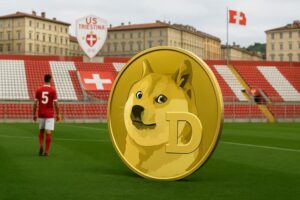
 In a move that pushes Dogecoin beyond internet culture and into real-world influence, House of Doge has announced its acquisition of a controlling stake in U.S. Triestina Calcio 1918. The deal marks one of the first major crossovers between cryptocurrency and European football ownership. More than a financial play, the initiative aims to bring crypto-powered engagement to fans — from tokenized experiences and digital collectibles to on-chain ticketing and merchandise. As Triestina looks to climb Italy’s football ranks, the Dogecoin community may have just found its new home stadium.
Who Is House of Doge?
House of Doge is the commercial arm created to extend Dogecoin’s playful identity into serious business ventures. Emerging from the community spirit that fueled the meme coin’s rise, the group positions itself as a bridge between digital culture and traditional industries. Its mission is clear: to transform Dogecoin’s global fandom into a platform that drives innovation, partnerships, and real-world adoption.
Unlike typical crypto investment firms, House of Doge leans heavily on Dogecoin’s unique cultural footprint — humor, inclusivity, and accessibility. It aims to bring that same ethos into sectors like sports, entertainment, and lifestyle branding. By acquiring U.S. Triestina Calcio 1918, the company is taking its most ambitious step yet, signaling that Dogecoin’s story is evolving from internet meme to mainstream movement.
This expansion also aligns with Dogecoin’s broader narrative shift: from a community joke token to a brand ecosystem capable of influencing consumer engagement and digital payments. The House of Doge project, in this sense, represents not only financial investment but also a symbolic one — proof that crypto culture can score beyond the blockchain.
About U.S. Triestina Calcio 1918
Founded more than a century ago in the port city of Trieste, U.S. Triestina Calcio 1918 stands among Italy’s most storied football institutions. Once competing in Serie A and known for its passionate local following, the club today plays in Serie C, Italy’s third professional division. Despite recent financial struggles and fluctuating league positions, Triestina remains a symbol of endurance — a team that has weathered wars, ownership changes, and decades of transformation in Italian football.
By acquiring Triestina, House of Doge enters not just a sports market, but a deep-rooted cultural ecosystem. Italian football is built on emotion, identity, and community — values that mirror the Dogecoin ethos of inclusivity and collective enthusiasm. The partnership aims to restore stability to the club while introducing modern digital tools for growth.
For local fans, this could mean a new chapter defined by international attention and technological innovation. For the crypto community, it represents something even larger: a tangible foothold in European sport — and perhaps the first step toward a new kind of fan ownership powered by blockchain.
Why This Matters — Crypto x Sports Synergy
The acquisition of U.S. Triestina Calcio 1918 is more than a headline-grabbing stunt — it’s a calculated move that underscores how crypto brands are seeking permanence beyond the digital sphere. By stepping into European football, House of Doge is tapping into a century-old industry driven by loyalty, community, and emotion — values that mirror the very foundation of Dogecoin’s success online.
This synergy is strategic on several fronts. For one, football clubs offer an unparalleled platform for brand visibility. Stadium banners, jerseys, and digital content expose a global audience to the Dogecoin name — not just as a cryptocurrency but as a lifestyle brand. Secondly, the move paves the way for blockchain integration in fan experiences: token-based memberships, on-chain ticketing, and collectible NFTs tied to the club’s history or players.
At a time when crypto markets are maturing, Dogecoin’s pivot into sports signals confidence in its cultural staying power. The deal positions House of Doge as a pioneer among community-driven projects, proving that the “meme coin” spirit can evolve into something tangible — a fusion of financial innovation and football passion.
The Broader Trend — Digital Assets in Football
House of Doge’s majority-stake acquisition fits neatly into a growing global pattern — the fusion of digital assets and professional football. Over the past few years, clubs from Paris Saint-Germain to Manchester City have embraced blockchain technology, launching fan tokens and NFT partnerships to boost engagement and create new revenue streams. Platforms like Socios.com and Chiliz have already proven that crypto can redefine fan participation, offering supporters a digital voice in club decisions and access to exclusive experiences.
What sets House of Doge apart, however, is its ownership approach. Rather than acting as a sponsor or technology partner, it has become a direct stakeholder in a football institution. This signals a deeper level of integration — one where blockchain isn’t just a marketing tool but part of the organization’s DNA. It’s a bold step toward a model where crypto-backed ownership and decentralized fan involvement could shape the future of club governance.
For European football, the implications are significant. If Dogecoin’s experiment succeeds, it could inspire a new generation of crypto-native investors to enter the sports world, potentially transforming how clubs are funded, operated, and connected to their global fanbases. From collectible tokens to blockchain-verified merchandise, the digital layer of football is expanding fast — and Dogecoin just claimed a spot on the field.
Market Impact & Community Response
The news of House of Doge’s majority-stake purchase in U.S. Triestina Calcio 1918 quickly made waves across crypto and sports circles. Within hours of the announcement, the story trended across social media platforms, with the Dogecoin community hailing it as a symbolic victory — proof that a project born from humor and community spirit could take root in one of Europe’s oldest football traditions.
On the market side, Dogecoin’s price saw a brief uptick in trading activity, though analysts cautioned that such reactions are often short-lived. Still, the deal injected fresh optimism into a community that thrives on cultural relevance rather than purely financial performance. Many users on X (formerly Twitter) described the move as “a meme turning into legacy,” reflecting Dogecoin’s evolution from internet culture to institutional involvement.
Mainstream investors, meanwhile, remain watchful. Some see the acquisition as a creative but risky experiment — a test of whether crypto branding can translate into sustainable business models beyond speculation. Yet even skeptics acknowledge the publicity power: House of Doge has succeeded in putting Dogecoin back in headlines worldwide, this time for something tangible, not just viral.