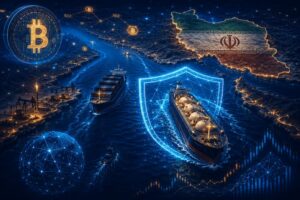
Iran is said to be developing a new insurance-based system for ships and cargo moving through the Strait of Hormuz, a strategic waterway at the center of global energy trade. According to reports from Iranian media, the plan is associated with a platform called Hormuz Safe, which would allow maritime insurance payments to be made in Bitcoin.
The initiative is being presented as a financial and legal alternative to direct transit fees. Rather than openly charging ships for passage, Iran could offer insurance policies or financial responsibility certificates to cargo owners and operators using the route. Supporters of the model argue that such a system could create a multibillion-dollar revenue stream for Tehran.
However, many details remain unclear. It is not yet certain whether Hormuz Safe is fully operational, which entities would underwrite or recognize the policies, or whether international shipping firms would be willing to use a system that may expose them to sanctions risk.
Why The Strait Of Hormuz Matters
The Strait of Hormuz connects the Persian Gulf with the Gulf of Oman and the wider Indian Ocean. It is one of the most important maritime routes in the world, especially for oil and liquefied natural gas shipments.
A significant share of global oil flows through this narrow passage, including exports from major Gulf producers such as Saudi Arabia, Iraq, Kuwait, the United Arab Emirates and Qatar. Any disruption in the area can quickly affect energy prices, shipping costs and insurance premiums worldwide.
Because of this strategic importance, Iran’s attempt to create a financial mechanism around Hormuz is not merely a regional issue. It has implications for global commodity markets, maritime security, sanctions enforcement and the broader competition over control of critical trade routes.
What Hormuz Safe Is Reportedly Designed To Do
According to Iranian media reports, Hormuz Safe would offer fast, digitally verifiable insurance coverage for maritime cargo passing through the Persian Gulf and the Strait of Hormuz. Payments would reportedly be settled in Bitcoin, after which the cargo owner would receive a digital certificate or receipt confirming coverage.
The initial scope of the coverage appears to be limited. The reported model focuses mainly on risks such as inspection, detention, seizure or confiscation. War-related physical damage, missile attacks or armed conflict risks may not be included in the first stage of the system.
That distinction is important. Hormuz Safe may not function like a conventional marine insurance product offered by global insurers. Instead, it could operate more like a politically backed safe-passage certificate recognized by Iranian authorities.
Why Bitcoin Is Central To The Plan
The use of Bitcoin is one of the most notable parts of the proposal. Iran has long faced restrictions on access to dollar-based banking, SWIFT transactions and Western financial institutions because of international sanctions. A Bitcoin-based payment model could allow Tehran to receive funds without relying on traditional banking intermediaries.
Bitcoin may also be viewed as more resilient than centralized stablecoins, which can be frozen by issuers or targeted by regulators. For a sanctioned state, that distinction matters.
Still, Bitcoin does not eliminate sanctions exposure. Transactions involving the Iranian government, Iranian state-linked entities or sanctioned financial institutions can still create serious legal and compliance risks. Shipping companies, brokers, insurers, reinsurers and financial intermediaries would need to assess whether participation in such a system could trigger penalties from U.S. or European authorities.
The Revenue Target And Its Unanswered Questions
Reports linked to the plan suggest that Iran could generate more than $10 billion annually through an insurance-based model. The argument is that direct passage fees would be politically difficult and legally controversial, while insurance certificates could be framed as a more acceptable financial service.
Yet the figure remains highly uncertain. It is not clear how many vessels would participate, how premiums would be calculated, whether the coverage would be mandatory in practice, or whether major shipping firms would recognize the certificates as legitimate.
There is also the question of enforcement. If a vessel refuses to buy coverage, it is unclear whether Iran would deny passage, increase inspections, threaten detention or simply treat the ship as uninsured. Each of these options would carry different legal and geopolitical consequences.
Legal And Sanctions Risks Could Limit Adoption
The Strait of Hormuz sits within a sensitive area of international maritime law. International straits are generally associated with transit passage rights, but Iran’s interpretation of those rules has often differed from that of Western governments.
If Iran attempts to make insurance certificates a practical requirement for safe passage, the move could face objections from other states and from the shipping industry. It may also raise questions about whether the system amounts to an indirect transit fee.
The sanctions issue is even more immediate. A company that pays Bitcoin into an Iran-linked platform could face scrutiny, particularly if the payment is viewed as benefiting the Iranian government or sanctioned entities. For large shipping companies with exposure to U.S. and European markets, that risk may be enough to discourage participation.
Is The System Actually Operational?
The biggest unresolved question is whether Hormuz Safe is already functioning or remains largely a political and financial proposal. Iranian-linked sources have described the platform as active or close to launch, but independent confirmation remains limited.
Key details are still missing, including official licensing, policy wording, claims procedures, underwriting structure, wallet information and the identity of participating companies. Without those details, it is difficult to determine whether Hormuz Safe is a working insurance platform, a trial project or a strategic signal from Tehran.
For now, the safest conclusion is that Iran is exploring a Bitcoin-based insurance mechanism for the Strait of Hormuz, but the system’s real-world reach remains uncertain.
If implemented at scale, the plan could mark a new phase in Iran’s effort to turn its geographic position into financial leverage. It would also test how far cryptocurrency can be used in high-stakes maritime trade before sanctions, legal disputes and market resistance limit its impact.