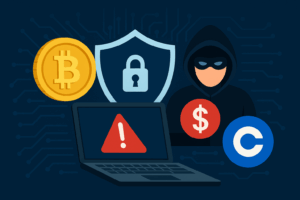
In May 2025, hackers infiltrated Coinbase by bribing a customer support employee abroad, gaining insider access to company systems. The stolen data included users’ names, email addresses, and critical identity details. The attackers demanded a $20 million ransom in exchange for not disclosing the data. Coinbase rejected the demand, launched legal proceedings against the hackers, and tightened its security protocols following the breach.
Behind the Cyberattack
One of the most striking aspects of the attack was the use of the human factor rather than a technical vulnerability. According to reports, hackers bribed an overseas customer support staff member, giving them access to Coinbase’s internal systems. This enabled the theft of user information and significantly expanded the scale of the breach.
Coinbase stated that the leak affected fewer than 1% of active users, but the fallout was far greater. Stolen data included names, birth dates, email addresses, and partially masked Social Security numbers. Such information is more than sufficient for malicious actors to conduct social engineering attacks. Coinbase alerted users and warned them about potential fraud attempts, but the size and nature of the incident sparked a heated debate across the crypto industry.
Coinbase Refuses to Give In to Blackmail
The attackers demanded $20 million to keep the stolen data from being released. Coinbase leadership refused. CEO Brian Armstrong declared that the company would not give in to threats against user security. Instead, Coinbase launched criminal proceedings and offered up to $20 million in rewards for information leading to the hackers’ capture.
While Coinbase’s firm stance earned praise from some, others argued that refusing to pay may have prevented the leak from being contained. Following the breach, the company upgraded its security systems, introduced extra protections for affected accounts, and activated compensation mechanisms to ensure users did not suffer financial losses.
A Multimillion-Dollar Hit
The financial impact of the hack was quickly felt. Coinbase announced that the incident could cost the company between $180 million and $400 million. These losses include not only technical upgrades but also potential compensation payments and legal expenses. Both the company’s reputation and its finances took a severe hit.
The stock market also reacted. Coinbase shares fell by roughly 6% after the incident. The timing was particularly damaging, as the company had recently joined the S&P 500 index, raising concerns among investors. In the broader crypto market, the hack reignited debates about security and regulation, with many calling for stronger oversight to prevent similar events.
A Test of Trust for the Crypto Ecosystem
The attack on Coinbase did not just affect one company—it rattled the entire crypto sector. The breach showed that even one of the most trusted platforms could fall victim to insider threats. This undermined confidence in centralized exchanges and may accelerate interest in alternative solutions.
Experts emphasize that tighter oversight and stronger internal controls are essential to prevent such incidents. As the Coinbase case demonstrates, cybersecurity is not only about technology but also about human resource management. For the growth of the crypto industry, user security must remain the top priority.
About Coinbase
Founded in 2012 and headquartered in San Francisco, Coinbase is one of the world’s largest cryptocurrency exchanges, operating in more than 100 countries. The company offers services such as trading, staking, and digital wallets. Listed on the stock market in 2021, Coinbase recently joined the S&P 500 index, further cementing its visibility in global finance.
As of today, Coinbase serves over 108 million registered users and manages more than $400 billion in digital assets. With its market scale and innovative products, Coinbase is considered one of the industry’s leaders. Following the latest incident, the company has committed to increasing security investments and taking stronger, more transparent steps to rebuild user trust.