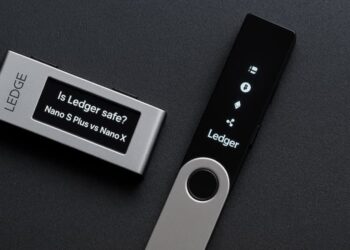
 The year 2025 has become a defining moment for the crypto industry, with digital security emerging as the top priority for investors. As cyberattacks on digital assets hit all-time highs, users began migrating away from online wallets toward offline, hardware-based solutions. In this climate of fear and vulnerability, demand for secure storage surged.
At the forefront of this shift is Ledger, a France-based hardware wallet manufacturer. Riding the wave of renewed interest in cold storage, the company reported a sharp spike in revenue—reaching the high nine-figure range—and is now exploring larger strategic moves, including a potential listing on a U.S. stock exchange.
The Explosion of Crypto Attacks and a Shift in Security Perception
In just six months, crypto-related cyberattacks in 2025 resulted in losses exceeding $2.2 billion, already surpassing the total amount stolen throughout 2024. Alarmingly, around 23% of these attacks targeted individual wallets, highlighting the vulnerability of personal storage solutions compared to centralized exchanges or custodial platforms.
This surge in threats prompted a noticeable shift in user behavior. Investors began moving their assets into cold wallets—offline hardware devices not connected to the internet—for greater security. Companies like Ledger, which specialize in this form of protection, have seen unprecedented demand as a result. Cold wallets are once again being viewed as essential tools for safeguarding digital assets.
Ledger’s Revenue Boom and Product Strategy
Ledger confirmed that its revenue in 2025 has reached the “nine-figure” range, placing it in the hundreds of millions of dollars. Though exact numbers weren’t disclosed, market observers point to a steep increase fueled largely by a surge in hardware wallet sales.
Two key forces are behind this growth:
-
Fear-Driven Demand
As cyberattacks escalated, users sought out offline protection. Ledger’s core value proposition—keeping crypto holdings completely offline—resonated strongly in this environment. -
New Multisig Product Launch
In 2025, Ledger introduced a new multisignature application, allowing users to require multiple approvals before authorizing transactions. While praised for its security benefits, the new pricing structure faced criticism from some users who felt essential protections were being monetized. Still, adoption has continued to climb, bolstered by Ledger’s reputation.
The company also touts an impressive benchmark: its devices reportedly safeguard over $100 billion worth of Bitcoin—a claim that has become a central part of its marketing narrative and brand identity.
U.S. Expansion and the Prospect of Going Public
Ledger’s financial success has translated into broader ambitions. In mid-2025, the company revealed that it is considering an IPO in New York, potentially listing on either NYSE or NASDAQ. No formal filings have been made, but analysts suggest 2026 is a plausible timeline for a potential public debut.
Listing in the U.S. could give Ledger access to deep pools of institutional capital, bolster its global brand visibility, and provide a new platform for growth. It would also allow the company to raise funds for expanding its hardware, software, and security offerings on a global scale.
For some market observers, the IPO plan represents a shift in Ledger’s identity—from a European security startup to a global infrastructure provider for digital asset protection. Still, going public would come with new obligations: regulatory scrutiny, investor accountability, and a higher level of operational transparency.
Criticism, Risk Factors, and Competitive Pressure
Despite its growth, Ledger faces several challenges. Chief among them is user backlash over the monetization of its new multisig app. While the feature enhances security, some critics argue that charging for basic protection contradicts Ledger’s original open, decentralization-first ethos.
Regulatory uncertainty also looms large—especially if the company proceeds with a U.S. IPO. Listing in the American market would require Ledger to comply with stricter standards related to user data, firmware transparency, and overall governance. Navigating this terrain without eroding user trust will be a critical test.
Then there’s competition. Brands like Trezor, Tangem, and Keystone are actively challenging Ledger’s dominance, often with lower-cost or open-source alternatives. These rivals continue to chip away at Ledger’s market share, especially among tech-savvy users seeking maximum transparency.
Ultimately, Ledger’s future depends not just on its ability to scale, but on how effectively it preserves the trust of a community that places security above all else.