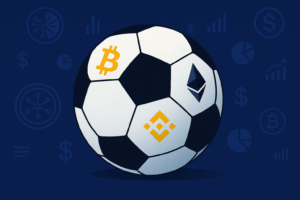
In recent years, sports sponsorships have increasingly attracted companies beyond traditional industries. Leading players in the cryptocurrency sector are investing heavily across sports—particularly football—to boost global brand recognition. For giants of the digital finance world, sponsorships are positioned as one of the most effective ways to reach mass audiences. The latest indicator of this strategy is the massive budgets announced for this season alone, exceeding half a billion dollars.
Major Sponsorships and Spending Breakdown
As of the 2024–25 season, crypto companies’ sports sponsorship spending has evolved from a mere marketing choice into a strategic battleground. The total sponsorship volume of $565 million is largely shaped by a few dominant players. Below are the leading brands, their spending, and activities:
-
Crypto.com – $213 Million
-
The largest spender among crypto companies.
-
Active in globally visible leagues such as the UEFA Champions League, Formula 1, and the AFL (Australian Football League).
-
Pioneer in naming rights with Crypto.com Arena in Los Angeles.
-
Consistently invests in high-profile sporting events to boost brand recognition.
-
-
Coinbase – $80 Million
-
U.S.-based exchange with a presence in American football and basketball, now expanding into football.
-
Partnerships with the NBA and WNBA, while also negotiating with European clubs.
-
Sponsorship strategy is more targeted and focused on brand positioning.
-
-
OKX – $71 Million
-
Gaining rapid influence in European football through its partnership with Manchester City.
-
Signed long-term contracts for both sleeve sponsorship and training facilities.
-
Premier League visibility strengthens its recognition in Asia and Europe.
-
-
Gate.io – $53 Million
-
Aggressive sponsorship strategy in emerging leagues.
-
Partnerships with local clubs in China, South America, and parts of Africa.
-
Investments often paired with digital campaigns.
-
-
Binance – $31 Million
-
Despite being one of the most globally recognized crypto brands, its sponsorship budget is comparatively smaller.
-
Previously sponsored Lazio (Serie A), but recently shifted focus from sponsorships to product launches and campaigns.
-
Investing more in Web3-based fan engagement projects.
-
Football’s Share: 43% Dominance
-
43% of crypto sponsorship spending goes to football.
-
28% goes to Formula 1.
-
Newly signed football sponsorships total over $130 million.
-
More than 20 new clubs partnered with crypto companies for the 2024–25 season.
-
Most popular leagues: Premier League, La Liga, Serie A, Bundesliga, and MLS.
Declining Areas
-
Esports sponsorships have dropped sharply, with spending down 85% compared to 2022.
-
Crypto brands increasingly view physical sports as more credible and prestigious long-term investments.
New Sponsorship Opportunities in the Premier League
For crypto companies, the English Premier League is one of the most attractive sponsorship markets—not only for its massive audience but also for its prestige. With the gambling sponsorship ban set to take effect in the 2025/26 season, new opportunities are emerging for crypto brands.
-
Legal Regulation: Betting Companies Out
-
In 2023, the UK government decided to ban betting companies from appearing on the front of Premier League kits starting in the 2025/26 season.
-
This decision leaves a major gap in a long-standing revenue stream.
-
It also encourages a shift toward more responsible and regulated sponsorship models.
-
-
A Gap for the Crypto Sector
-
With betting sponsors leaving, shirt-front, sleeve, and training kit sponsorships have opened up for crypto firms.
-
Given the Premier League’s global broadcasting reach, these spots offer unmatched exposure.
-
-
Growing Interest and New Deals
-
By 2024, many clubs began talks with crypto companies to cover the revenue shortfall caused by betting restrictions.
-
OKX’s partnership with Manchester City is a leading example, covering not only kits but also digital fan experiences.
-
Some clubs are also integrating blockchain solutions for fan engagement and NFT-based revenues.
-
-
Trust as Important as Visibility
-
The Premier League’s strict oversight requires crypto firms to meet high standards in both financial capacity and corporate credibility.
-
This favors established, licensed firms while filtering out smaller, unregulated exchanges.
-
Future Expectations
Crypto companies’ interest in sports is no longer just a short-term promotional strategy. Sponsorship spending—especially in globally influential fields like football—has become part of long-term brand building. This trend is expected to bring the total back toward the $685 million peak reached in 2022 by the 2025–26 season.
In the future, sponsorships will focus not only on logo visibility but also on deeper integration, such as fan engagement experiences, NFT-backed memberships, and blockchain-based ticketing solutions. Clubs and organizations will increasingly view crypto partners not merely as sponsors but as technology partners driving digital transformation.
In leagues like the Premier League, the shift away from gambling sponsorships is opening safer, more institutional, and regulation-friendly spaces for crypto firms—demonstrating that the sector is moving toward a more sustainable model.
In the Coming Period:
-
Sponsorships will expand beyond elite clubs to include lower leagues and women’s sports,
-
Major crypto brands will invest in projects that redefine the digital fan experience,
-
The sports industry will adopt Web3 and blockchain technologies more quickly through these partnerships.
All this shows that the alliance between sports and crypto is not a temporary wave—it is the transformation itself.